A Handwritten Font That Feels Like a Real Smile
Last Tuesday, I found myself staring at a stack of blank kraft bakery boxes, a fresh batch of lemon shortbread cooling on the rack, and absolutely no design direction. The logo I’d scribbled on a napkin looked, well, like a napkin. The labels I’d bought online felt cold and generic. As a small business owner who does most of her own branding, I needed something that felt personal without looking homemade in the wrong way. That’s when I started hunting for a handwritten font that could carry the heart of my product, and I kept coming back to one name: Tiny Hand Script.
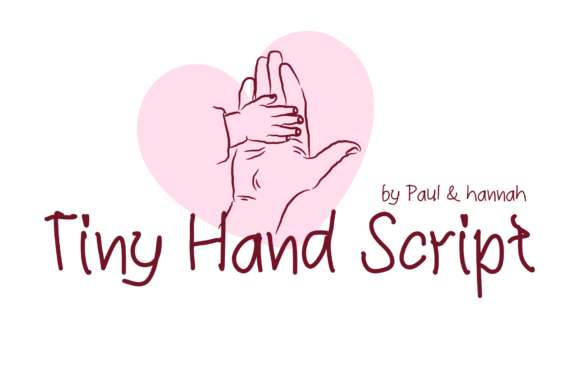
Tiny Hand Script is, quite literally, a font built from the handwriting of a four‑year‑old. But don’t let the origin fool you into thinking it’s messy or unusable. The typeface has been cleaned up just enough to stay legible while keeping every ounce of that wobbly, genuine, unguarded warmth. The letters tilt gently, the loops are a little irregular, and the baseline has that soft bounce you’d see on a fridge‑held masterpiece. It’s a display font with a soul, one that whispers sincerity instead of shouting for attention. For a brand that wants to feel approachable, playful, and trustworthy, this font does something that most polished script fonts never manage—it feels real.
Testing Tiny Hand Script on a Bakery’s New Packaging
I decided to give it a proper trial run on my shortbread packaging. My plan was simple: redesign the product label, the thank‑you card tucked inside the box, and the small sticker we seal the tissue paper with. I loaded up Tiny Hand Script in my design software and typed out the words “lemon vanilla” in all lowercase. Immediately, the phrase looked like something my own child might have written on a Saturday morning, yet it had enough structure to sit proudly on a label next to a clean sans serif font for the ingredient list.
The capital letters, I noticed, have a charming unevenness—the ‘T’ leans right like it’s in a hurry, the ‘S’ starts a little high and swoops down. It’s these tiny quirks that make a script font like this so effective for packaging design. Customers pick up a box and, without knowing why, feel like they’re holding something made by a real person. That emotional connection is what turns a one‑time buyer into a regular.
For the thank‑you card, I used Tiny Hand Script at a slightly larger size, paired with a short, heartfelt message. The font’s natural rhythm made the printing look like actual handwriting—no one would guess it was typed. I even tested it on a kraft paper belly band, and the ink sat beautifully on the textured surface, the letters holding their shape without becoming a blur. If you’re selling handmade candles, skincare, or any product that hinges on a personal touch, this handwritten font can transform your packaging from forgettable to memorable in an afternoon.
Where This Font Shines Brightest
After weeks of incorporating Tiny Hand Script across multiple materials, I’ve learned exactly where it works hardest for a small business. It’s not a font you’ll use for long paragraphs or detailed descriptions—the readability drops on dense blocks of text, especially at small sizes. But that’s not its job. This is a premium font meant for the moments that matter most.
Think of it as the star of your design assets, not the supporting actor. Use it for:
- Product labels and packaging titles: jam jars, candle vessels, soap wrappers, tea tins, bakery boxes.
- Logos and wordmarks: especially for businesses where a friendly, handmade vibe is part of the promise—boutiques, florists, children’s clothing lines, or coaching brands.
- Thank‑you cards, note inserts, and stickers: the font’s innocence turns a simple “thanks” into a meaningful gesture.
- Social media graphics and digital ads: use it for Instagram Story quotes, promotional banners, or website hero text. On screens, it stays crisp and retains its handwritten feel.
- Menu headers and café specials boards: a coffee shop could print daily specials with Tiny Hand Script and instantly look like a neighborhood favorite.
In every case, the font acts as a visual handshake. It says, “We made this for you, and we really mean it.” That’s a rare quality in modern typography, where so many script amp offerings lean overly formal or overly childish. Tiny Hand Script lands in the sweet spot—naive but capable, delicate but strong enough to hold its own on a store shelf.
Pairing Tiny Hand Script for Readability and Polish
One of the most common mistakes I see in small business branding is using a single decorative font for everything. Even the prettiest handwritten font needs a reliable partner. I’ve found that Tiny Hand Script pairs beautifully with a clean, no‑nonsense sans serif font for secondary information. Try it with a geometric sans like Montserrat, a friendly one like Nunito, or even a sturdy workhorse like Open Sans. The contrast between the organic, looping letters of the script and the structured, even strokes of the sans serif creates a visual hierarchy that guides the customer’s eye without confusion.
For brands that trade on elegance—think wedding invitation suites or high‑end skincare—the font can also sit alongside a refined serif font. The childlike honesty of Tiny Hand Script against a classic serif like Playfair Display creates a tension that feels both luxury and heartfelt. It’s unexpected, but it works beautifully on box inserts or hang tags.
When you’re designing for small formats, like a one‑inch round sticker or a social media thumbnail, enlarge the script generously. Tiny Hand Script’s letterforms have thin upstrokes and slightly heavier downstrokes; at tiny sizes those hairlines can disappear on screen or in print. Keep it no smaller than 12pt for printed materials, and always do a test print on your target paper. If you need to use it on a product mockup for an online shop, make sure the mockup resolution is high enough to preserve those delicate curves—nobody wants a pixelated “thank you.”
Making the Most of a Premium Script Font
Before you dive in and start redesigning your entire brand identity, it’s smart to check exactly what’s included in the font file. With any commercial font, you’ll want to confirm the format (OTF or TTF usually works best), whether the set includes alternates, ligatures, or multiple weights, and if there’s multilingual support for the languages your customers speak. Tiny Hand Script, in my experience, covers the basics beautifully. It’s not a massive family with eighteen weights—it’s a single, well‑crafted style that does one thing and does it with charm.
I also strongly recommend reading the font’s licensing terms, especially if you plan to use it on products you sell. A standard desktop license might cover your thank‑you cards and product labels, but if you’re putting the font on merchandise, in templates you sell, or on a logo that a client will trademark, you may need an extended commercial font license. It’s a small but crucial step to protect both your business and the designer who poured hours into preserving a four‑year‑old’s handwriting.
Beyond the legal side, think of this font as a design asset that reduces your workload. Instead of trying to create a handwritten look with a stylus or scanning actual children’s notes, Tiny Hand Script gives you consistency across every touchpoint. Your Instagram templates, business cards, website banners, and product labels will all share the same voice. That coherence is what builds a memorable brand identity—customers begin to recognize your look even before they see your logo.
A Little Font That Punches Above Its Weight
I didn’t expect to become this attached to a typeface, but Tiny Hand Script has become the quiet hero of my brand refresh. It turned my shortbread boxes into gifts people want to photograph and share. It made my café’s weekend specials board look like a chalkboard from a countryside bakery, even though I designed it on a laptop. And it reminded me that the best creative fonts aren’t always the loudest or most complex—they’re the ones that make people feel something.
If your business has a story that’s rooted in personality, if you want your packaging to feel like an extension of your hands instead of a factory line, this script font deserves a spot in your toolkit. It won’t solve every design challenge, but for the moments where a human touch is the whole point, Tiny Hand Script delivers a freshness that’s increasingly hard to find in the polished world of modern typography. I’ve already got it loaded and ready for my next batch of labels, and I have a feeling it’ll stay there for a very long time.